My great-uncle, also my adopted father,
is Uncle Tom. This sweet man is a figure in my life that brings joy and
laughter. While he loves going out and can start a conversation with anyone, he
also enjoys being at home, working in his garden or reading a good book. Upon
meeting him, you would think he’s a pretty average man who leads a healthy,
care-free retired life with his beautiful family. However, after spending more
time with him, you might notice that he seems often confused or that he’s not
listening to a word you’re saying. Uncle Tom was born with a permanent hearing
impairment that has affected his entire life. Like most aging men, he loses
hearing as time passes. Currently in his late 60s, Uncle Tom is close to deaf.
Thanks to science and his retirement savings, he is currently wearing special
hearing aids that have added significant quality to his hearing. For this
project, I’ll share the story of my family vacation to Paris this summer and only
a few of the many obstacles we faced because Uncle Tom mistakenly left his
hearing aids at home.
Yes, we left behind one of the family’s
most valuable and important pieces in the rush of packing. Immediately, we came
across challenges: Uncle Tom drove us to the airport while Aunt Ellene
attempted to call out directions. Security at the airport asked him questions
that he could not hear nor understand. This impairment affects more than Uncle
Tom. When he can’t hear he gets frustrated which affects his attitude toward
his family. We, in turn, become frustrated with him because our patience wears
thin.
Our first day in Paris my aunt and
sister were exhausted from the jetlag, so Uncle Tom and I went out for a day in
the city. We went out to lunch at a local café; fun for me, but frustrating for
my uncle. Not only did he know almost no French, he couldn’t hear the little
English that they were trying to speak to us. I had to be the buffer in between
Uncle Tom and our French waitress who wasn’t sure why my uncle seemed to be so
rude as to not speak to her (preventing “sociality”). With “activity” in mind, I
ordered for the both of us quickly so that the waitress could relieve me of how
uncomfortable and stressed I was. I then tried to have a conversation with him
in the midst of the loud talking and clinging dishes. Quiet “privacy” would
have been ideal, but our privacy consisted of the “comfort” of letting him be
the only one to talk since I was the only one who could hear. We then went to
the Lourve museum where we were given a guided tour. At first we tried to stand
in front of the crowd so that my uncle could hear, but he ended up “adapting”
by using a recorded audio tour (which provided “sensory stimulation”). He was
thankful that the environment offered that “control” for him. We knew that we
had to stay close in case we got separated (the “crowding” would make it
difficult to find each other again) so I picked up an audio tour so that we
would be at the same pace. He still enjoyed the museum and our trip to Paris
despite the difficulties that came along with his hearing impairment. It is
very humbling to walk alongside the life of someone with a physical disability
and a testing of the love and patience of a strong family. I am forever
thankful for Uncle Tom; he is such an inspiration.
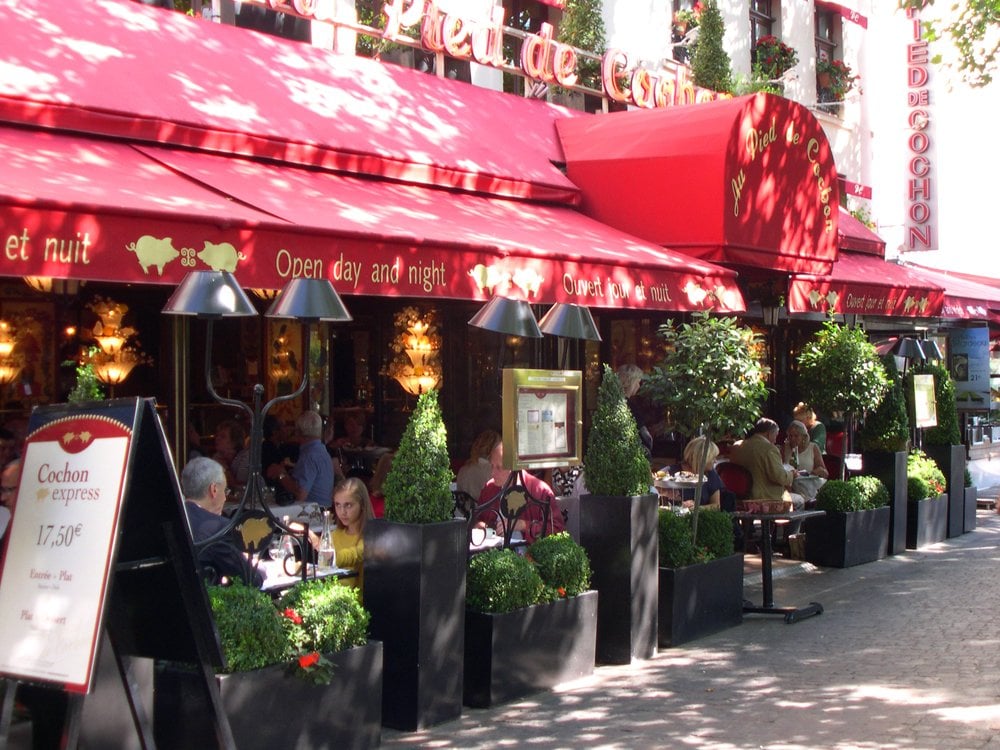 |
| This café is small and crowded, making it more difficult for Uncle Tom to hear me or our waitress |
 |
|
As you can
imagine, the crowd and distance from the tour guide makes it hard for Uncle Tom
to hear.
|
 |
| Would you be interested in an audio guide on your next visit to a museum? Check out their website to see what they have to offer! It’s especially helpful for those who have trouble hearing; they can still be “in the know” without hearing the tour guide among a crowd. |

No comments:
Post a Comment